When the Board Says ‘Cancelled’: A 2026 Passenger Playbook for Delays, Bumping and Refunds
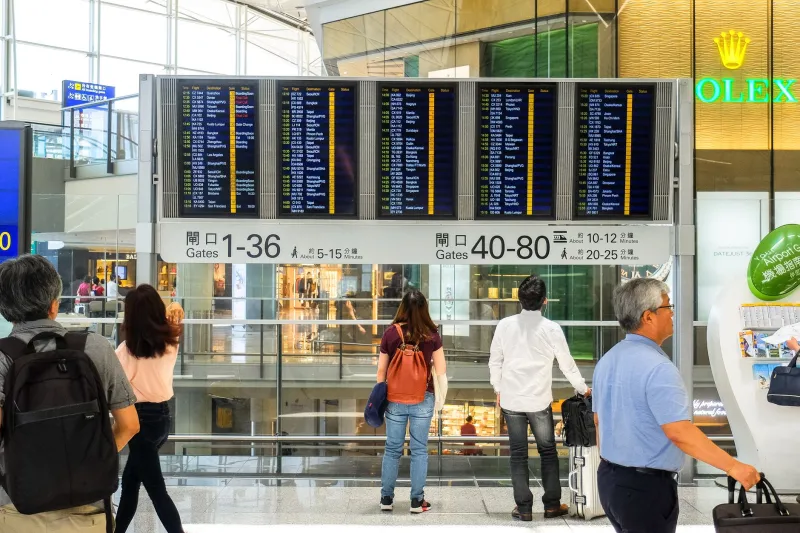
There’s a particular kind of silence that falls over a departure lounge when the word CANCELLED appears next to your flight. Then comes the rush: a queue at the desk, a QR code nobody can scan, and a member of staff explaining that “it’s out of our hands”.
Deep breath. Under UK law, you have firm rights — and they don’t depend on the airline being in a generous mood. Here’s what you can realistically ask for, what you can’t, and how to get it without turning your holiday into a second job.
First, check which rulebook applies
Most flights leaving a UK airport are covered by the UK version of the EU flight compensation rules (often called UK261). Flights arriving into the UK on a UK or EU carrier are usually covered too. A flight from, say, Spain to the UK on a UK airline? Generally covered. A domestic hop from Manchester to Belfast? Covered.
A return leg on a non-UK, non-EU airline, booked as part of a through-ticket from the UK, can be messier — but start from the assumption you’re covered and make the airline explain why you’re not. If you booked a package holiday, the Package Travel Regulations sit on top of all this, and your organiser has its own duties to look after you.
The three things you’re owed — and they are not interchangeable
People often mix these up, which is exactly how airlines end up paying less than they should. Keep them separate in your head.
- A refund or a rerouting. If your flight is cancelled, you get to choose: your money back within seven days, or a replacement flight at the earliest opportunity (or a later date that suits you, subject to seats). The airline should offer both — it can’t force a voucher on you.
- Care while you wait. Meals, refreshments, two calls or emails, and hotel accommodation with transfers if you’re stranded overnight. This applies even when the cancellation was caused by something extraordinary — the care duty is far harder for airlines to dodge than compensation.
- Cash compensation. A fixed sum, separate from the refund, when the cancellation was within the airline’s control and you were told with less than 14 days’ notice.
Compensation: the current numbers
The amount depends on the distance of the flight, not the ticket price. As a rough guide for 2026:
| Flight distance | Compensation per passenger |
|---|---|
| Up to 1,500 km | £220 |
| 1,500 km to 3,500 km | £350 |
| Over 3,500 km | £520 |
The 14-day rule matters. If the airline told you more than two weeks before departure, compensation generally falls away — though your refund or rerouting rights don’t. If you were told between seven and 14 days out and the replacement flight gets you there only slightly late, the amount can be reduced by half.
When the airline can legitimately say no
“Extraordinary circumstances” is the phrase to listen for. It covers things genuinely outside the airline’s control: severe weather that closes the airport, air traffic control strikes, a security incident, a volcanic ash cloud. It does not usually cover a technical fault that could have been spotted in maintenance, a crew shortage, or the airline’s own scheduling choices — even if those are inconvenient for them.
If they cite extraordinary circumstances, ask for the specific reason in writing. Vague references to “operational reasons” are not good enough. The Civil Aviation Authority (CAA) has been quite clear about this over the years.
Delays and missed connections
A long delay isn’t a cancellation, but the care duty kicks in after a set time — generally two hours for short flights, three for medium-haul and four for long-haul. Compensation for delays follows a similar distance-based structure, but only if you arrive at your final destination at least three hours late.
Missed connection because of a delay on the first leg? If both legs were on one booking, the airline should treat it as a single journey. If you booked the legs separately to save a few pounds, you’re largely on your own — which is worth remembering next time you’re tempted by a self-transfer.
Bumped off an overbooked flight
Being denied boarding against your will is treated similarly to a cancellation. Before you hand over your seat, ask what you’re being offered in writing. If the airline asks for volunteers, you can negotiate — cash, a later flight, hotel, lounge access. If nobody volunteers and you’re bumped, the standard compensation and care rules apply.
The airport survival plan
Here’s the practical bit. Do these in order and you’ll be in a much stronger position later.
Get it in writing before you leave the airport. Ask the desk for a cancellation notice or delay confirmation with the reason and the time you were told. A photo of the departure board helps, but the airline’s own paperwork is better.
Keep every receipt. Meals, taxis, a reasonable hotel. Keep it sensible — a round of drinks and a spa treatment will be questioned. If the airline says it won’t reimburse, pay anyway and claim later; don’t sleep in the terminal to prove a point.
Don’t accept a voucher as compensation unless you genuinely want one. Vouchers are not the same as cash, and accepting one can sometimes complicate a later claim.
Book your own replacement — carefully. If the airline’s offer is absurd (three days later, via another continent), you can arrange a reasonable alternative and claim the cost. Keep it proportionate and keep the receipts. This is an area where it’s worth a quick call to the airline before you spend.
Ask for the complaint reference. Every conversation should end with a reference number and the name of the person you spoke to.
Package holidays are a different animal
If your flight was part of a package, your tour operator is on the hook for getting you home and for the standard of the trip you paid for. That can be a faster route than chasing an airline, particularly when the airline and the operator are pointing at each other. Check your booking confirmation — the ATOL or ABTA logo is a decent clue.
If the airline says no
Start with a written complaint to the airline. Keep it short: flight number, date, what happened, what you’re claiming, and copies of receipts. Give them eight weeks. Many pay up at this stage simply because the file is complete.
If they don’t, you can escalate to the CAA for flights covered by UK261, or to an approved alternative dispute resolution (ADR) scheme if the airline belongs to one. It’s free for you and surprisingly effective.
If the dispute is really about a refund rather than compensation — say, the airline has cancelled and is sitting on your money — your card provider may be able to help. Credit card purchases over £100 can fall under Section 75, and debit card payments can sometimes be reversed via chargeback. Both have time limits, so don’t sit on it.
A quick sanity checklist
- Was the flight cancelled, delayed by three hours or more, or were you bumped?
- How much notice did you get?
- What reason did the airline give — and is it in writing?
- Have you kept receipts for meals, hotels and transport?
- Have you asked for the refund or rerouting you’re entitled to, separately from compensation?
- Have you given the airline eight weeks to respond?
None of this makes a cancelled flight fun. But knowing the rules turns a chaotic afternoon into a manageable one — and it means the difference between accepting a £10 meal voucher and getting the £520 you’re actually owed.