Left in the Porch, Gone by Teatime: Chasing a Parcel That Never Arrived
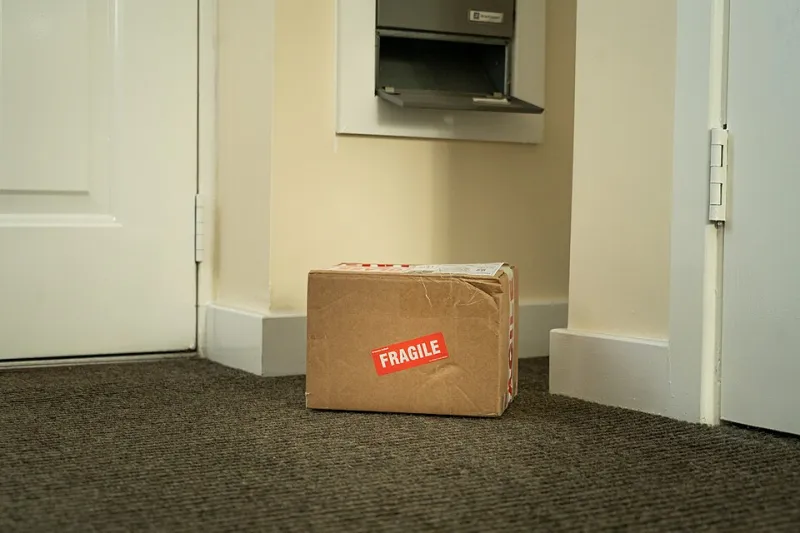
Photo: Meanwell Packaging, CC BY 2.0, via Wikimedia Commons
The tracking page says ‘delivered’. Your doormat says otherwise. It is a peculiarly modern frustration: a notification pings, you picture a box on the step, and you come home to nothing but a leaf and an indignant cat. Before you start ringing courier depots or composing a furious review, take a breath. In most cases, your argument is not with the driver. It is with the shop.
The retailer carries the risk, not you
Under the Consumer Rights Act 2015, goods stay at the trader’s risk until they come into your physical possession — or the possession of someone you nominated, such as a neighbour or a concierge. The retailer’s contract is with you. The courier is the retailer’s subcontractor, not your personal delivery service. That legal detail matters: if the parcel never reaches you, the retailer is generally the one who must refund or replace it. They can argue with the courier about compensation afterwards.
This is why ‘we’ve passed it to our delivery partner’ is not a full answer. You did not buy a tracking number; you bought a thing. The retailer owes you the thing.
There is an exception. If you specifically asked the retailer to use your own courier, or you arranged collection through a carrier yourself, risk can pass earlier. That is unusual in ordinary online shopping. For most click-and-buy purchases, the shop wears the risk.
The ‘safe place’ scrap
Delivery firms love a safe place. Behind the bin, inside a porch, over the side gate, wedged under a plant pot. Sometimes it works beautifully. Sometimes it is how a parcel meets the rain.
The legal question is simple: did you agree to it? If you told the retailer ‘leave it in the porch’ or set a safe place on your courier account, risk can pass when the parcel is left there. But if a driver unilaterally decides that ‘behind the recycling box’ is a safe place, that is not usually your consent. A photo of a parcel beside a wheelie bin proves where the courier put it. It does not prove delivery to you.
If the retailer says it was left in a safe place, ask for evidence that you authorised that specific place. A screenshot of a courier’s app saying ‘safe place: front door’ may be the courier’s note, not your instruction. Keep the distinction clear.
Don’t make the courier your first call
You can complain to the courier, and many have decent claims processes. But your consumer rights run against the retailer. Chasing the depot can eat days and leave you with a case number and no sofa. Put your complaint in writing to the retailer first. Ask for a replacement or a refund. Give them the order number, tracking reference, delivery address and a short factual account. Attach the tracking page and any photo the courier provided.
Ask them to confirm, in writing, what proof they have that the parcel was delivered into your hands or to someone you nominated. A signature that is a squiggle, a photo of a shadow, or a GPS pin near the street is not necessarily the end of the matter.
A practical playbook
Start with the boring checks. Ask neighbours, look in the usual hiding spots, check with a building manager or concierge. Parcels turn up in odd places. If it is genuinely missing, move quickly.
- Put your complaint to the retailer in writing within a few days. Keep it calm and specific.
- Ask for a refund or replacement under the Consumer Rights Act 2015. Say clearly that the goods have not come into your possession.
- If they claim a safe place, ask for proof that you agreed to it.
- Set a sensible deadline — 14 days is reasonable — and say what you will do next.
- If the retailer stalls, contact your card provider about a chargeback. If you paid by credit card and the cash price was over £100, Section 75 of the Consumer Credit Act may give you a claim against the card company as well as the retailer.
- For a stubborn case, send a letter before action and consider the small claims track. It is designed for people without lawyers, and the fees are modest compared with the price of a lost laptop.
Chargeback, Section 75, or small claim?
A chargeback is a card scheme process, not a court case. It can be quick, but time limits apply — often around 120 days from the transaction or from when you expected delivery. Rules differ between card providers, so ask yours. Section 75 is stronger in some ways: for credit card purchases over £100 and up to £30,000, the card issuer can be jointly liable with the retailer. It does not cover debit cards, though chargeback may.
A small claim is the last resort. It suits clear, documented losses and a retailer that has stopped engaging. You do not need a solicitor for the small claims track, but you do need evidence: order confirmation, tracking history, your emails, and a clear timeline. In England and Wales the limit is £10,000; Scotland and Northern Ireland have their own procedures and lower limits.
The porch pirate problem
A parcel taken by a passer-by is theft, but you do not have to identify the thief to get your money back. Your claim is about the retailer’s failure to deliver, not a criminal investigation. You can report the theft to the police if you want a record, especially for expensive items, but do not expect that to replace the consumer claim. If parcels go missing repeatedly at your address, tell retailers and use a locker or click-and-collect. Some home insurance policies cover parcel theft, but the excess often swallows a small claim.
The bottom line
An empty doorstep is annoying, but the law is usually on your side. The shop owes you the goods. The courier is the shop’s problem. Keep your messages short, factual and in writing, ask for proof of delivery to you, and use chargeback or a small claim if the retailer digs in. And if the driver’s ‘safe place’ is a hedge, feel free to say so — politely.