A Gift, Not a Deposit: Who Keeps the Engagement Ring When a Relationship Ends
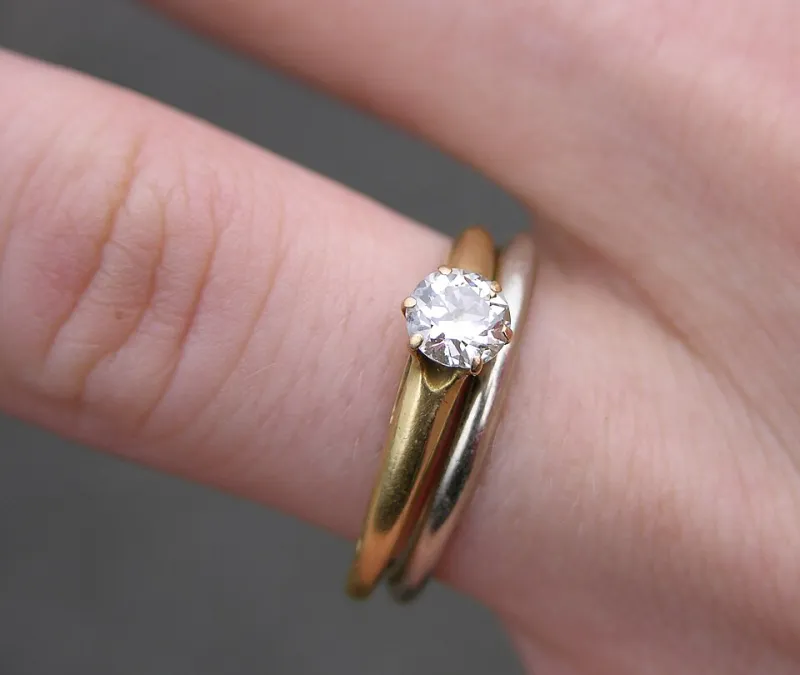
Photo: Photo by Derek Ramsey (Ram-Man), CC BY-SA 2.5, via Wikimedia Commons
The venue is cancelled, the Save the Dates are in the recycling, and the ring is sitting in its box like a very expensive awkward silence. Then someone asks the question: who actually keeps it?
It's one of those disputes where everyone has a confident opinion and almost nobody has checked. So let's separate the emotional ledger from the legal one, because they are not the same document.
The starting point: a ring is a gift, not a deposit
In England and Wales, the law starts from a fairly blunt position. Under section 3(2) of the Law Reform (Miscellaneous Provisions) Act 1970, a gift of an engagement ring is presumed to be an absolute gift. In plain English: it belongs to the person wearing it. Not on loan until the wedding, not refundable if the relationship ends — a gift.
The presumption can be rebutted, but the person trying to get the ring back has to prove that it was given on a condition — express or implied — that it would be returned if the marriage didn't happen. That's a real legal test, not a vibe.
This is also why the old "who's to blame" question has largely fallen away. Older case law from the 1920s once tied the answer to whose fault the break-up was. The 1970 Act flipped the starting point, and nowadays fault is mostly relevant only as background evidence about what was actually said when the ring was handed over.
A quick flag: this is the England and Wales position. Scotland and Northern Ireland have their own rules, so don't assume a Scottish friend's story applies to you.
When a ring isn't really a gift
The absolute-gift presumption is strong, but it isn't unbreakable. It tends to wobble in a few situations:
- There was an actual condition. "This is yours, but it comes back to me if we don't get married" — said out loud, in a message, or in front of witnesses — is the clearest example.
- It's a family heirloom. If the ring belonged to a grandparent and was handed over with a clear understanding that it stays in the family, a court may be more willing to find an implied condition. "She'd want it to stay with the family" is weaker than "we agreed it goes back to Mum if we don't marry."
- It was never really given. A ring lent for a proposal photo, or handed over "just for the weekend", is a different thing entirely.
- Someone else paid. If a parent bought the ring and it's clear the ring was always intended to remain family property, that can change the analysis.
The burden sits with the person claiming the ring back. They need evidence — not just a strong feeling that it was obviously meant to return.
Does it matter who ended it?
Usually, no. The statute doesn't ask who walked away. It asks whether the ring was given outright or on a condition.
That can feel unfair. If your ex cheated, or called things off by text, or moved out while you were at work, the instinct is that they shouldn't keep anything — let alone something expensive. But the law isn't a fairness calculator. It's asking a narrower question: whose property is it?
Where the conduct can matter is as evidence. Messages sent around the time of the proposal, or during the break-up, might show what was said about the ring. "I'll drop your gran's ring back" is not the same as "keep it, it's yours". Words said in anger are still words, and a judge may look at them.
Text messages, receipts and the paper trail
If there's a dispute brewing, the boring admin matters more than the dramatic speeches.
Keep the original messages, not just screenshots-of-screenshots. Save emails, voice notes and anything that shows how the ring was described at the time. Dig out the receipt, the valuation certificate, the insurance policy, and the proposal photos if they help. Check whose name the ring is insured under — that's often quietly revealing.
If you're the one holding the ring, don't flog it, don't get it reset, and don't hand it to a friend "for safekeeping" while the argument rumbles on. If you're the one asking for it back, put the request in writing, calmly, with a clear deadline, and keep a copy.
And resist the urge to post about it. A subtweet is not evidence, and it might create a separate problem you didn't need.
A practical checklist for the hand-back conversation
- Decide what you actually want. The ring? The money? An apology? Closure? These lead to different conversations, and only one of them is a legal claim.
- Work out the realistic value. A £300 ring and a £30,000 heirloom are not the same problem.
- Send one calm, written message. Say what you're asking for, why, and by when. No insults, no essay. It may end up in front of a judge.
- Offer a compromise if it's sensible. A buy-out, a sale and split, or a straight return. A deal is usually cheaper and faster than a hearing.
- Keep a simple timeline. Dates of the proposal, the break-up, the messages, the requests. It's surprisingly useful.
- Don't use the ring as leverage. Withholding it over a shared deposit or an unpaid phone bill muddies the water and may make you look unreasonable.
- If it's an heirloom, treat it carefully. Emotional weight aside, heirlooms are exactly the kind of item a court may expect to go back to the family.
Small claims: when it's worth it, and when it isn't
If the ring is worth a few thousand pounds and the other side won't budge, the small claims track is the usual route in England and Wales. It's designed for claims up to £10,000, it's relatively informal, and you don't need a solicitor — though you can instruct one if you want to.
Be honest with yourself about the maths. Court fees, time off work, the cost of a valuation, and months of admin can easily swallow a modest claim. A £500 ring is rarely worth a legal fight; a £15,000 heirloom might be. Mediation is often the better first stop, and courts expect you to have tried to resolve things before turning up.
Also remember what a court can and can't do. It can order the return of property or payment of its value. It cannot order your ex to admit they were horrible, or to say sorry in a way that feels satisfying. If that's what you're really after, a claim will disappoint you.
Emotional fairness versus legal ownership
Most ring disputes are two arguments wearing one coat. The first is about ownership. The second is about fairness — who behaved badly, who wasted whose time, who deserves what.
It's worth separating them. Legally, the ring usually stays with the person who was wearing it unless there's clear evidence of a condition. Fairness might point somewhere else entirely. You can acknowledge the second without pretending it's the first.
If the ring is genuinely valuable, or there's an heirloom at stake, a short fixed-fee chat with a solicitor is often money well spent. Not because you need a courtroom showdown, but because a clear answer about where you stand makes the rest of the conversation much easier.
The ring came off. That part is done. What happens next is mostly about evidence, tone, and deciding whether this is a fight worth having.